
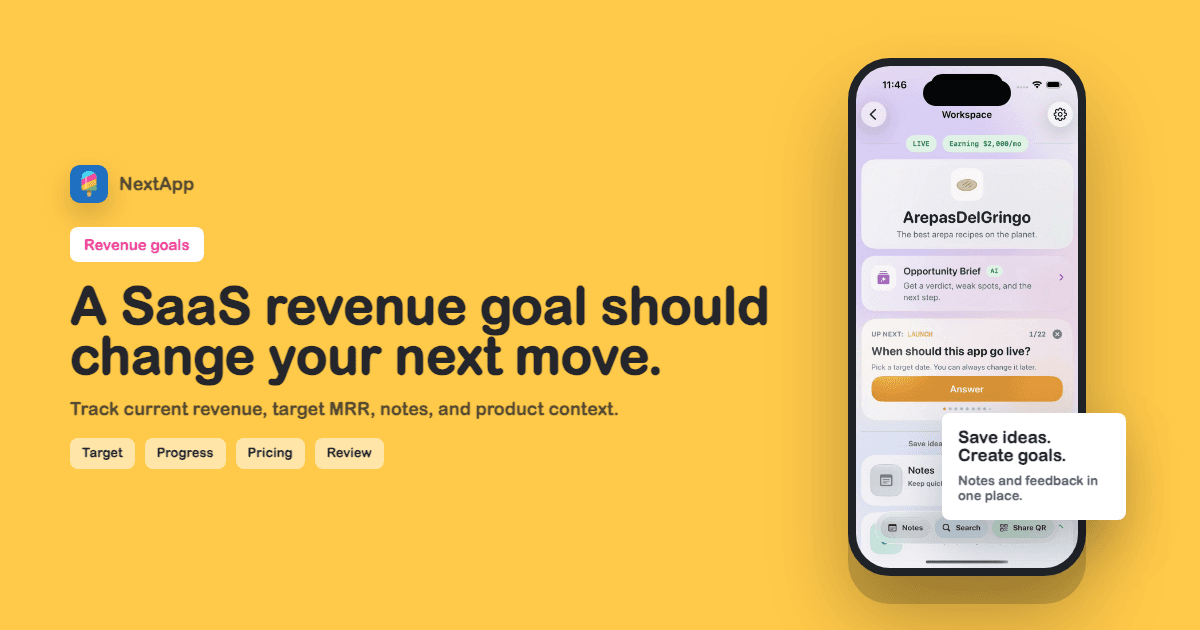
A SaaS revenue goal tracker should answer one question: what number would make this app worth more time?
For an indie app, the first useful goal may be tiny. First paid customer. First $50 MRR. First $500 MRR. The number matters less than the decision it creates.
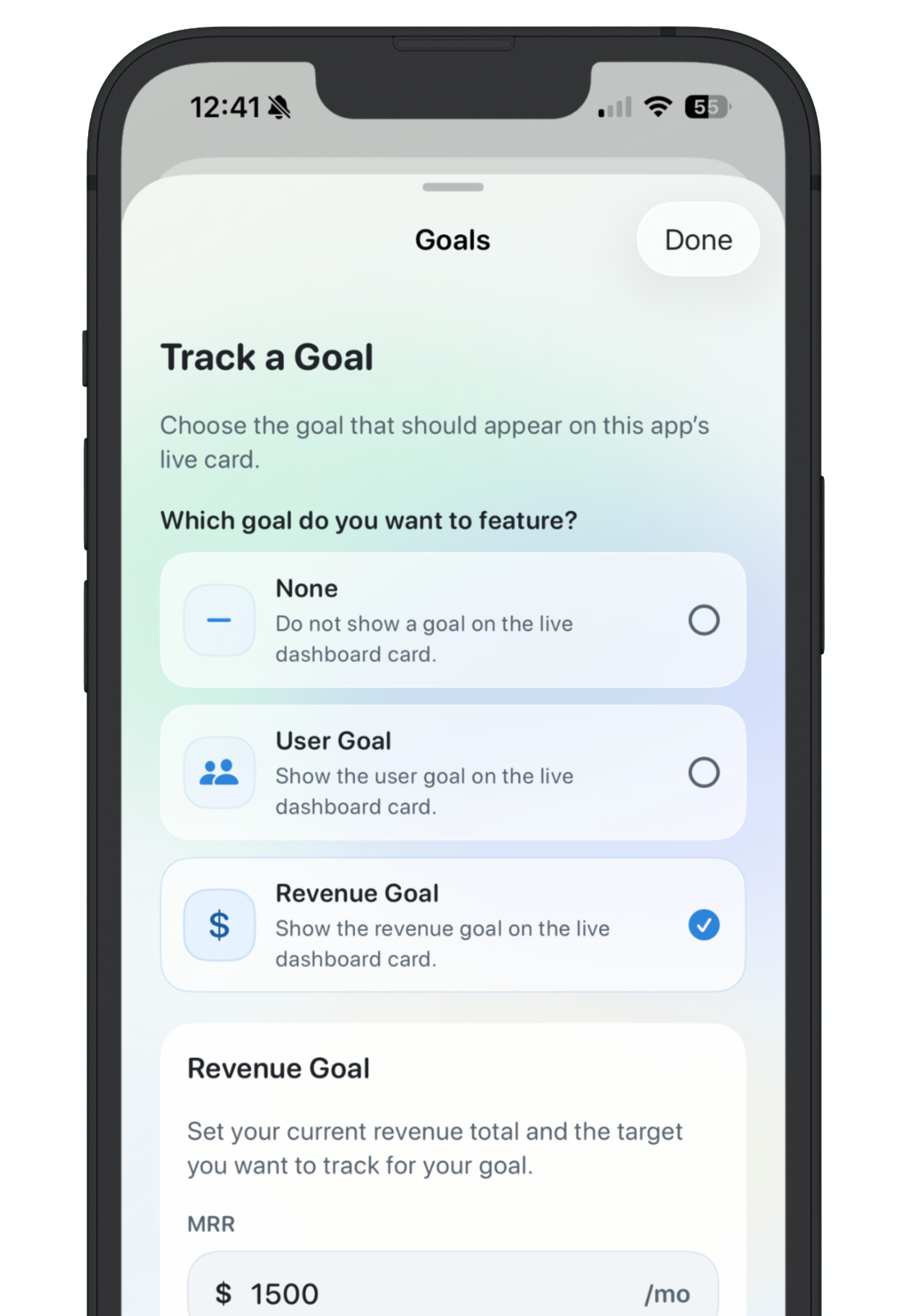
A revenue goal should change the next product decision, not sit there as decoration.
Choose a goal tied to behavior
Pick a number that would change your plan. If hitting $100 MRR means you keep building and missing it means you test pricing or onboarding, the goal is useful.
Track current and target together
A target without current revenue is aspiration. Current revenue without a target is trivia. Put them together so progress is visible.
Add product notes near the number
Revenue moves because something happened: launch traffic, pricing changes, onboarding fixes, churn, or a better promise. Save those notes near the goal.
Review by app, not only account
If one app is at $0 and another is at $900, the total does not tell you where to focus. App-level goals keep strategy practical.
SaaS revenue goal checklist
- Goal has a decision attached.
- Current revenue and target revenue are both visible.
- Product changes are logged near the number.
- Revenue is tracked per app when needed.
- Public display is optional.
Keep going with MRR goal tracker, public MRR tracker, MRR tracker tools.