
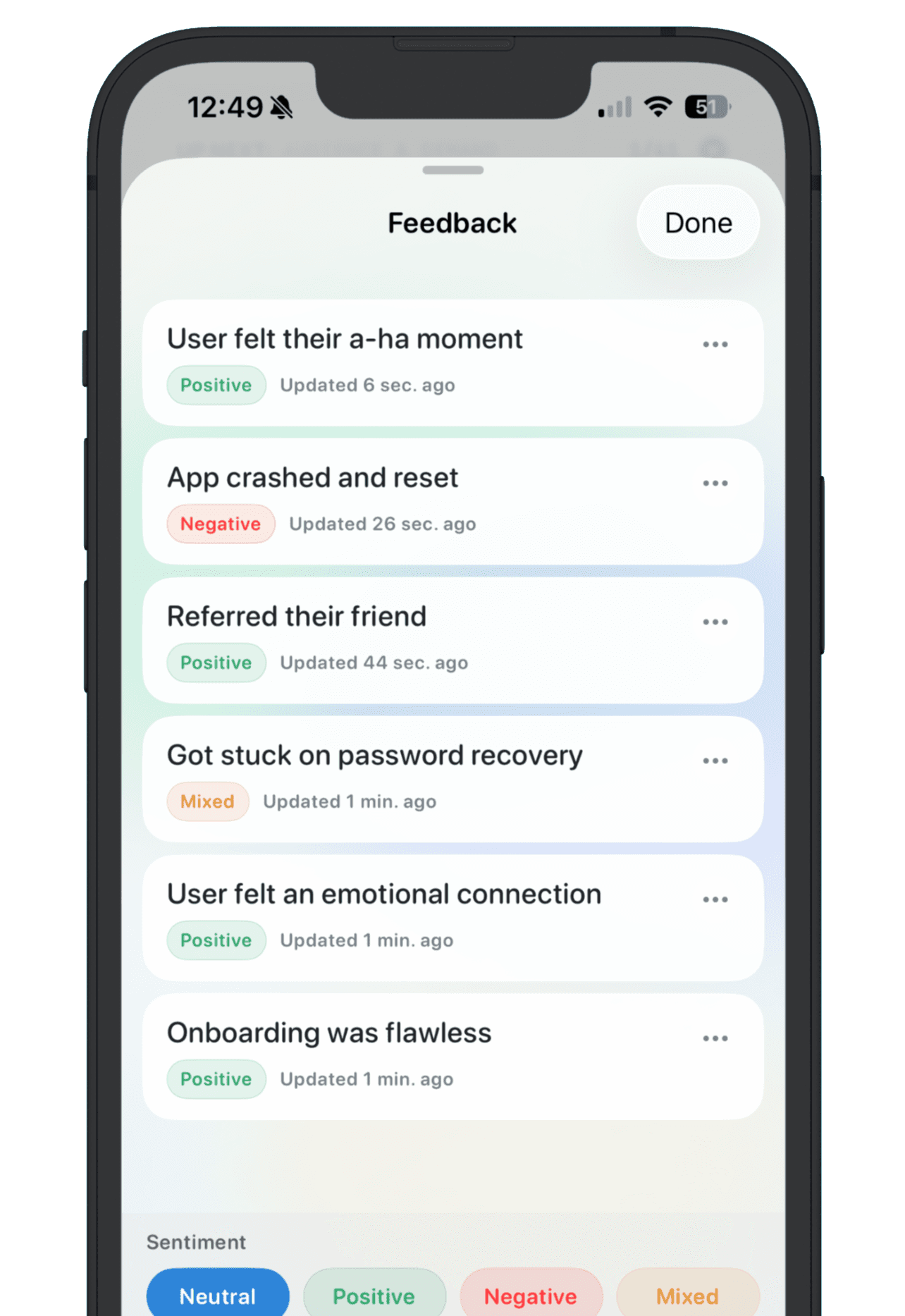
User feedback is easy to collect and easy to lose. Indie app builders hear useful reactions in DMs, support emails, Reddit comments, App Store reviews, Discord threads, X replies, and quick conversations. If those notes stay scattered, the next product decision depends on memory instead of evidence.
A feedback tracker does not need to be complicated. It needs to preserve what the user said, connect it to the right app, and make patterns visible before you change the product.
Track the source
Save where the feedback came from: customer email, social reply, support request, review, friend test, beta group, community post, or your own observation. Source matters because one angry comment and five repeated requests should not carry the same weight.
Track the app and feature context
Feedback should live with the app it changes. If you build multiple side projects, a generic feedback inbox becomes confusing quickly. Attach the note to the exact app, feature, screen, or launch version when you can.
Write the user quote first
Before summarizing, save the original wording. The user quote keeps the pain honest. You can add your interpretation later, but the raw language is often what makes positioning, onboarding, and bug fixes clearer.
Tag sentiment lightly
Use simple sentiment tags: positive, neutral, negative, request, bug, pricing, onboarding, and confusion. The goal is not perfect taxonomy. The goal is to review feedback without rereading every note from scratch.
Turn repeated feedback into a decision
Feedback becomes valuable when it changes what you do next. A repeated request may become a feature. A repeated confusion may change the landing page. Positive feedback may become public proof. Weak feedback may be archived so it does not distract you.
Review feedback on a cadence
Set a weekly review for active apps. Look for repeated pain, repeated language, and repeated moments where users get stuck. Then make one decision: build, clarify, ask a follow-up question, or ignore for now.
NextApp keeps feedback attached to each app workspace, alongside goals, notes, launch links, and public status. That makes feedback part of the product record instead of another pile of disconnected notes.