
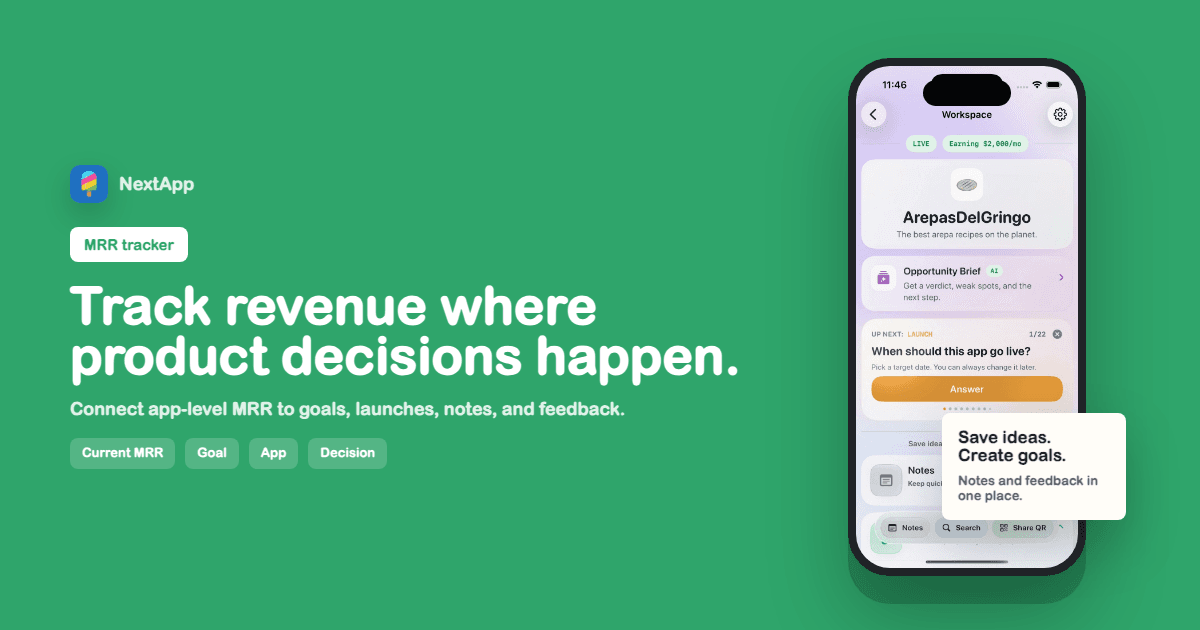
An MRR tracker for solo founders should not feel like enterprise analytics. It should tell you what is growing, which app owns the revenue, and what decision the number should influence.
The point is not to stare at a chart. The point is to know whether to keep building, improve conversion, raise prices, change positioning, or archive the project.
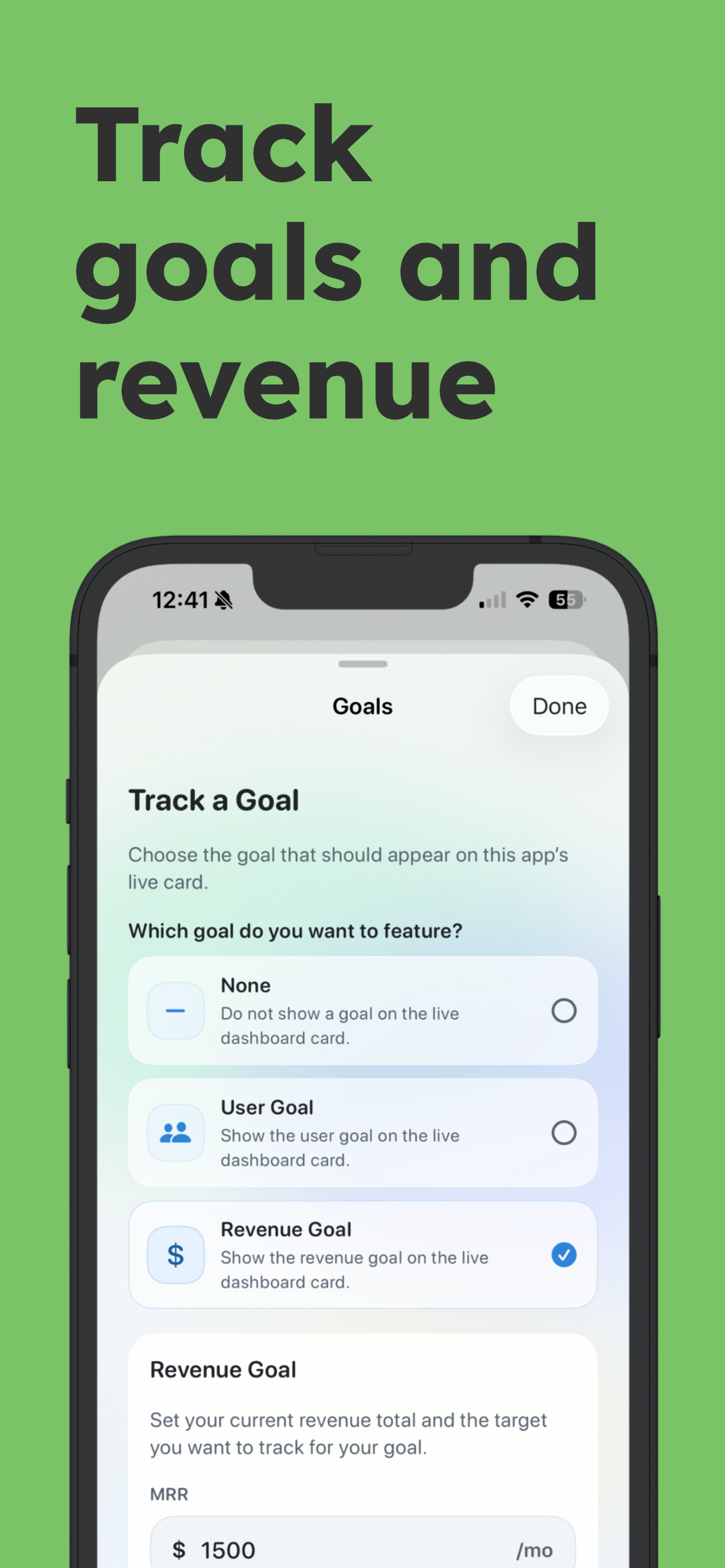
For a solo founder, MRR is most useful when it is tied to the app and decision it affects.
Track app-level revenue
If you run several apps, total MRR hides the story. Track current MRR and target MRR on each app so you can see which product is actually moving.
Pair revenue with context
Revenue without context is easy to misread. Save launch dates, pricing changes, onboarding work, and user feedback beside the app's revenue goal.
Use goals as decisions
A goal like $500 MRR or $2,000 MRR should have a meaning. If the app hits it, what changes? If it misses, what will you test next?
Keep public sharing optional
Some founders build trust by sharing MRR. Others keep it private. The tracker should support both without making accidental public disclosure easy.
Solo founder MRR tracker checklist
- Current MRR and target MRR are tracked per app.
- Revenue changes are linked to product updates.
- Goals have decision meaning.
- Public sharing is opt-in.
- The tracker fits a weekly review.
Keep going with MRR tracker tools guide, track MRR without spreadsheets, SaaS revenue goal tracker.