
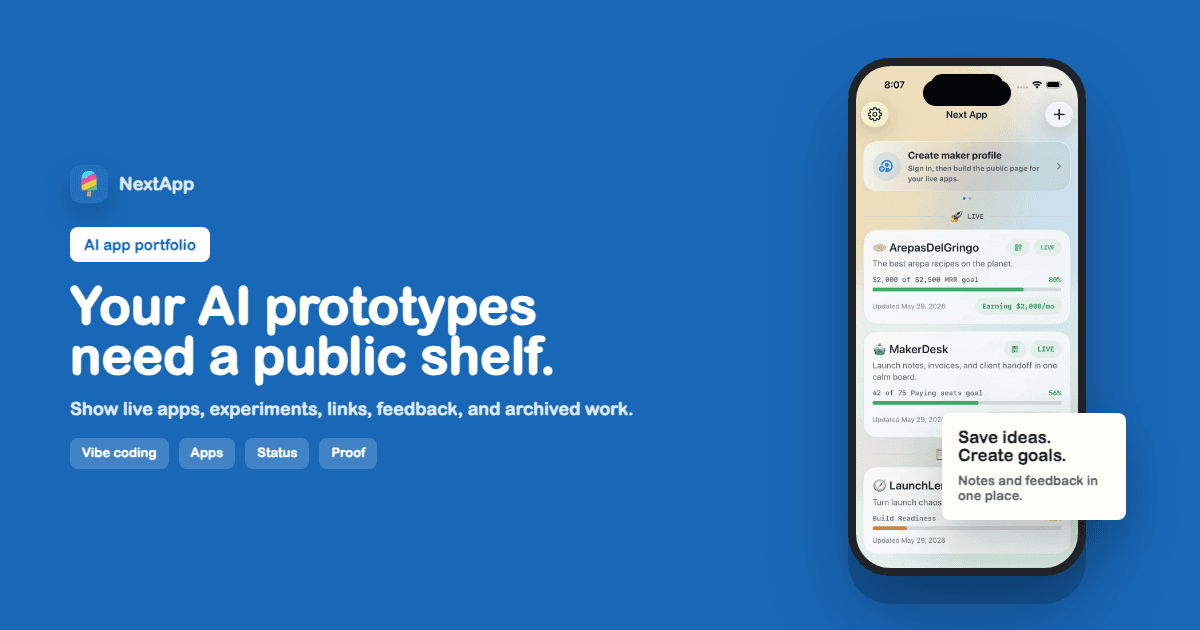
Vibe coding makes prototypes cheap. That creates a new problem: where do all those shipped, half-shipped, and maybe-shipped apps live?
An AI app portfolio turns scattered builder links into a public record. It shows which apps are live, which are tests, which were archived, and what you want visitors to try.
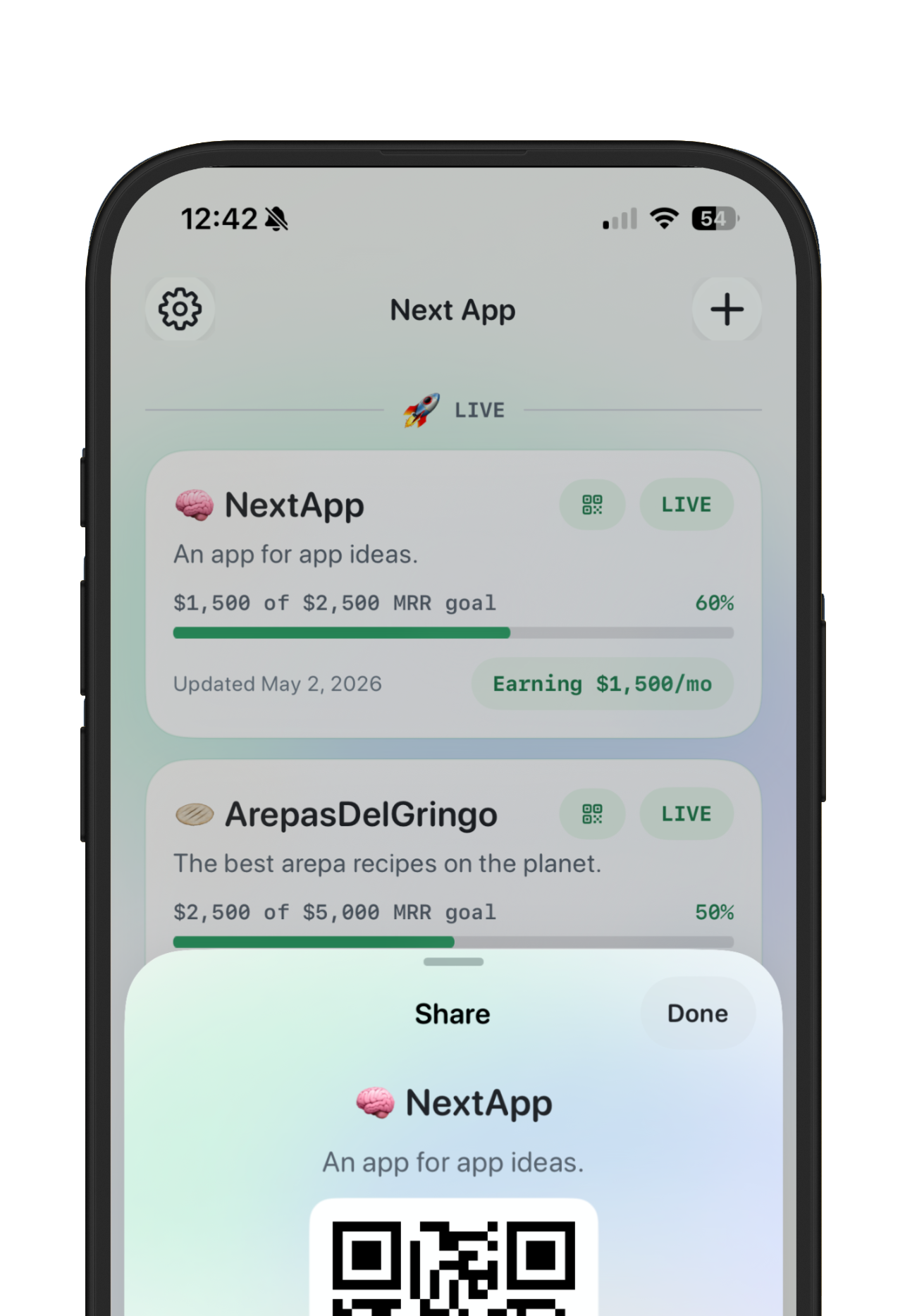
AI-built apps need the same thing hand-built apps need: status, context, and a link people can trust.
Do not let builder links become the portfolio
Lovable, Bolt, Replit, Cursor, and v0 links are useful, but they do not explain the app. The portfolio should add the name, promise, status, and next action.
Separate experiments from live products
AI prototypes can look finished before they are useful. Status labels help visitors understand whether something is live, beta, waitlist, ideating, or archived.
Track feedback before another prompt session
A portfolio is stronger when each app has feedback attached. That stops you from fixing random UI details while the real problem stays untouched.
Use the page as proof of taste
The point is not to show that AI generated screens. The point is to show that you can choose useful problems, ship links, learn, and keep going.
AI app portfolio checklist
- Every app has a status.
- Builder links are wrapped in app context.
- Feedback is attached to the app.
- Archived AI experiments are separated from live work.
- The profile has one clear CTA.
Keep going with vibe coding tracker, AI project tracker template, profile builder.