
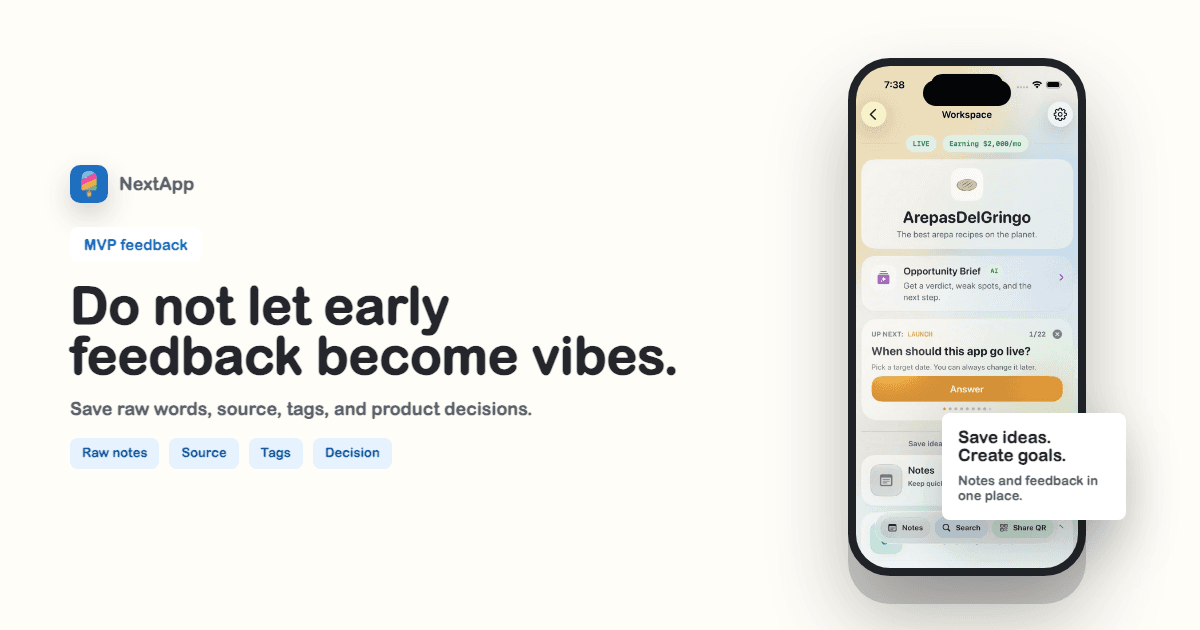
An MVP feedback tracker should keep early reactions from turning into a pile of vibes. You need the user's words, the source, the affected app area, and a decision state.
The tracker should help you answer a hard question: is this a pattern worth building for, or just one person's preference?
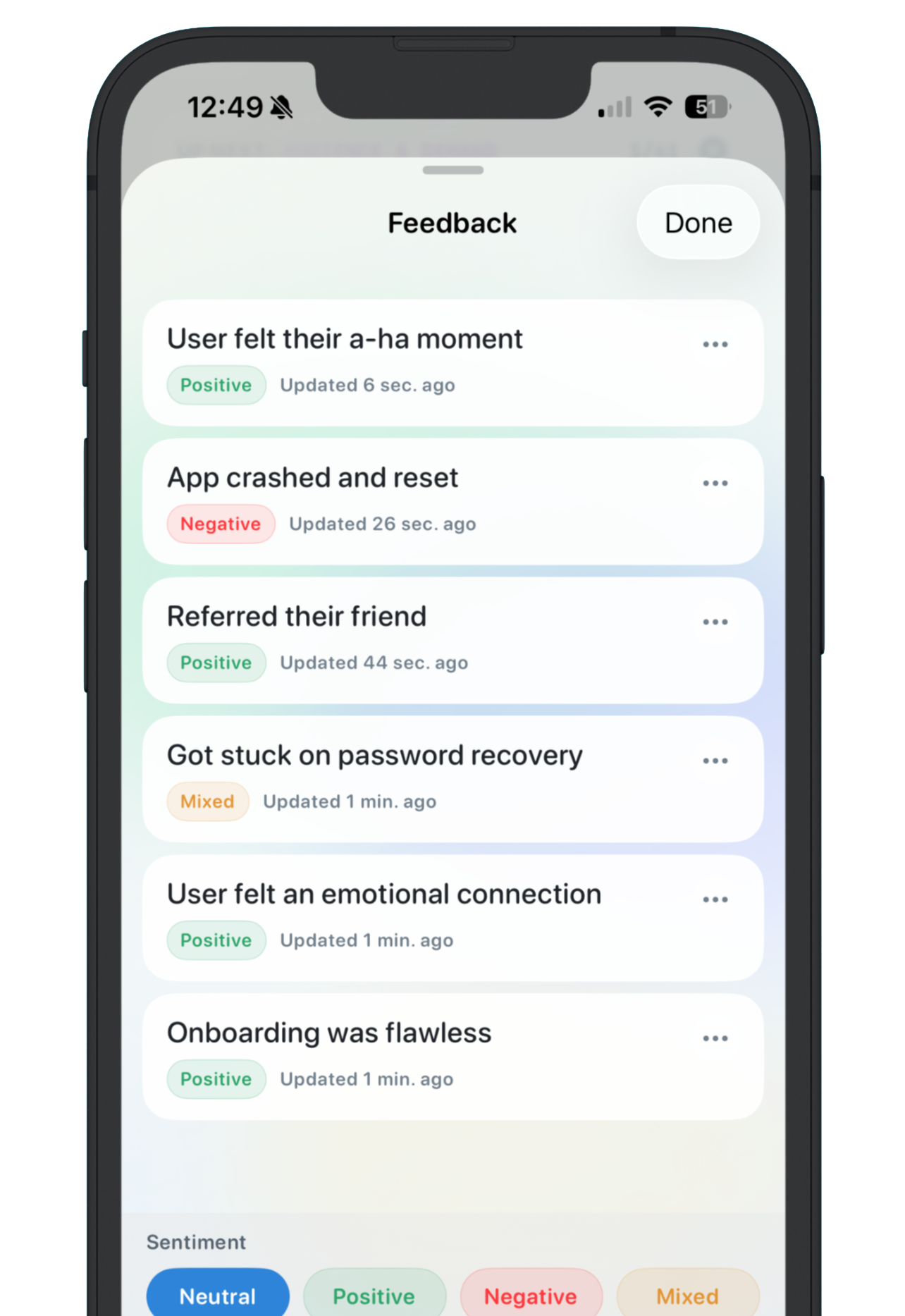
MVP feedback is useful when the original words stay attached to the app decision.
Save the raw wording
Paraphrasing too early can hide the real issue. Save what the user actually said, then add your interpretation separately.
Tag the product area
Onboarding, pricing, activation, sharing, export, performance, and confusion are useful tags. They let patterns show up over time.
Separate bugs from product requests
A bug is a broken promise. A feature request is a new promise. Treating them the same makes the next build cycle messy.
End with a decision
Every feedback item should eventually become planned, shipped, declined, or needs more evidence. Otherwise the tracker becomes another inbox.
MVP feedback tracker checklist
- Raw user wording is saved.
- Feedback source is recorded.
- Product area is tagged.
- Bug, request, and confusion are separated.
- Decision state is updated after review.
Keep going with user feedback tracker, feature request tracker, beta user feedback loop.