
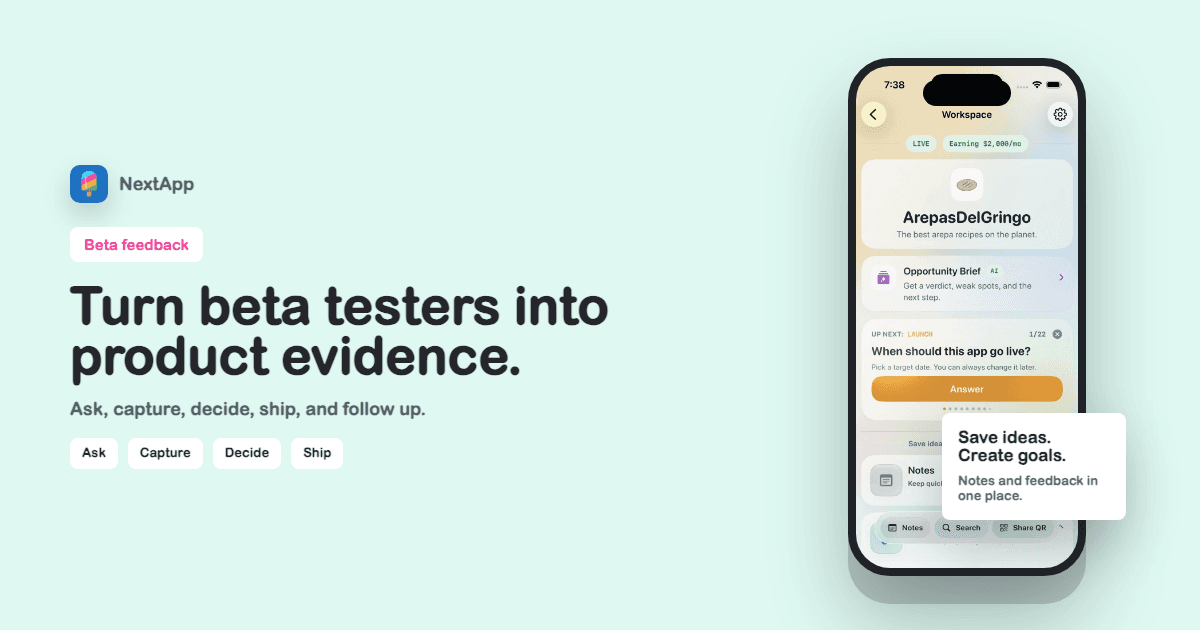
Beta testing gets quiet when people do not know what kind of response you want or whether their notes went anywhere. A useful loop gives users one clear ask, gives you a place to sort signal, and creates a habit of following up after changes ship.
Without that loop, beta testers become a list. With it, they become product evidence.
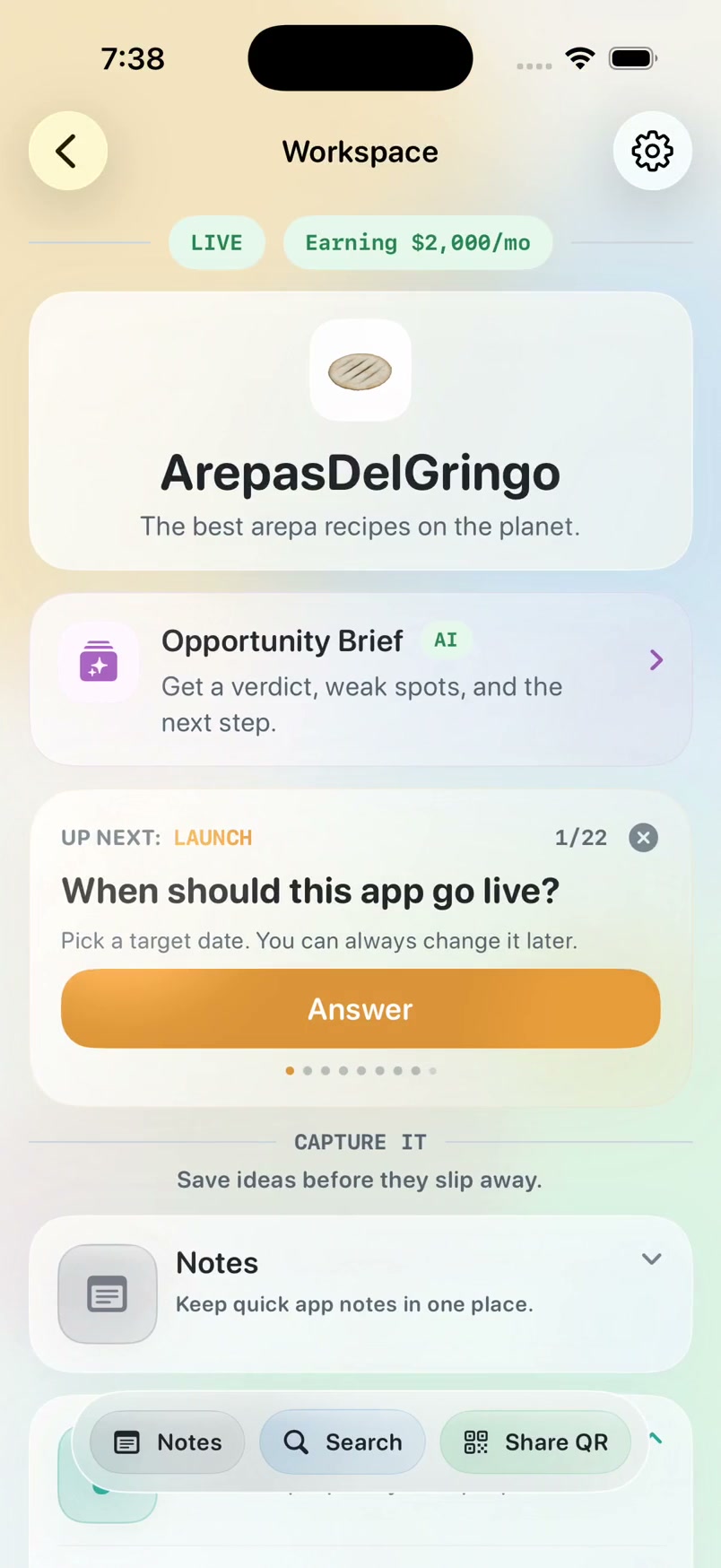
Beta feedback needs a loop: ask, capture, decide, ship, and follow up.
Ask for one thing at a time
A broad request like tell me what you think often produces polite noise. Ask about onboarding, pricing, the first task, or one moment where the app should help.
Capture feedback with source
Save who said it, where it came from, and what app area it affects. Patterns are much easier to see when source and context are attached.
Tell users what changed
A beta loop earns trust when people see their feedback become decisions. Even a declined request can build trust if you explain the reason.
Move shipped changes into public proof
When beta feedback improves the app, update the public app page. It shows momentum and gives new visitors a reason to trust the product.
Beta feedback loop checklist
- Feedback asks are specific.
- Source and app area are captured.
- Requests receive a decision state.
- Shipped changes are communicated.
- Public app page reflects meaningful progress.
Keep going with MVP feedback tracker, feature request tracker, build in public guide.