
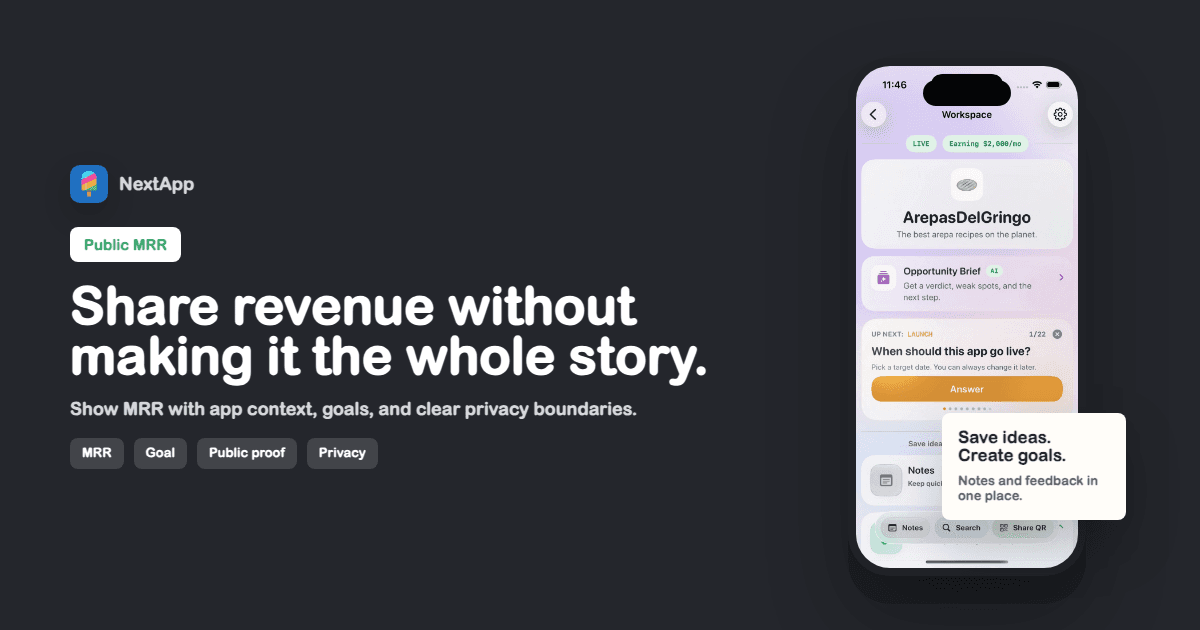
A public MRR tracker can create accountability, trust, and momentum. It can also become a weird scoreboard if the number is shared without context.
The healthiest version is simple: show revenue only when it helps visitors understand the app, the goal, and the journey.
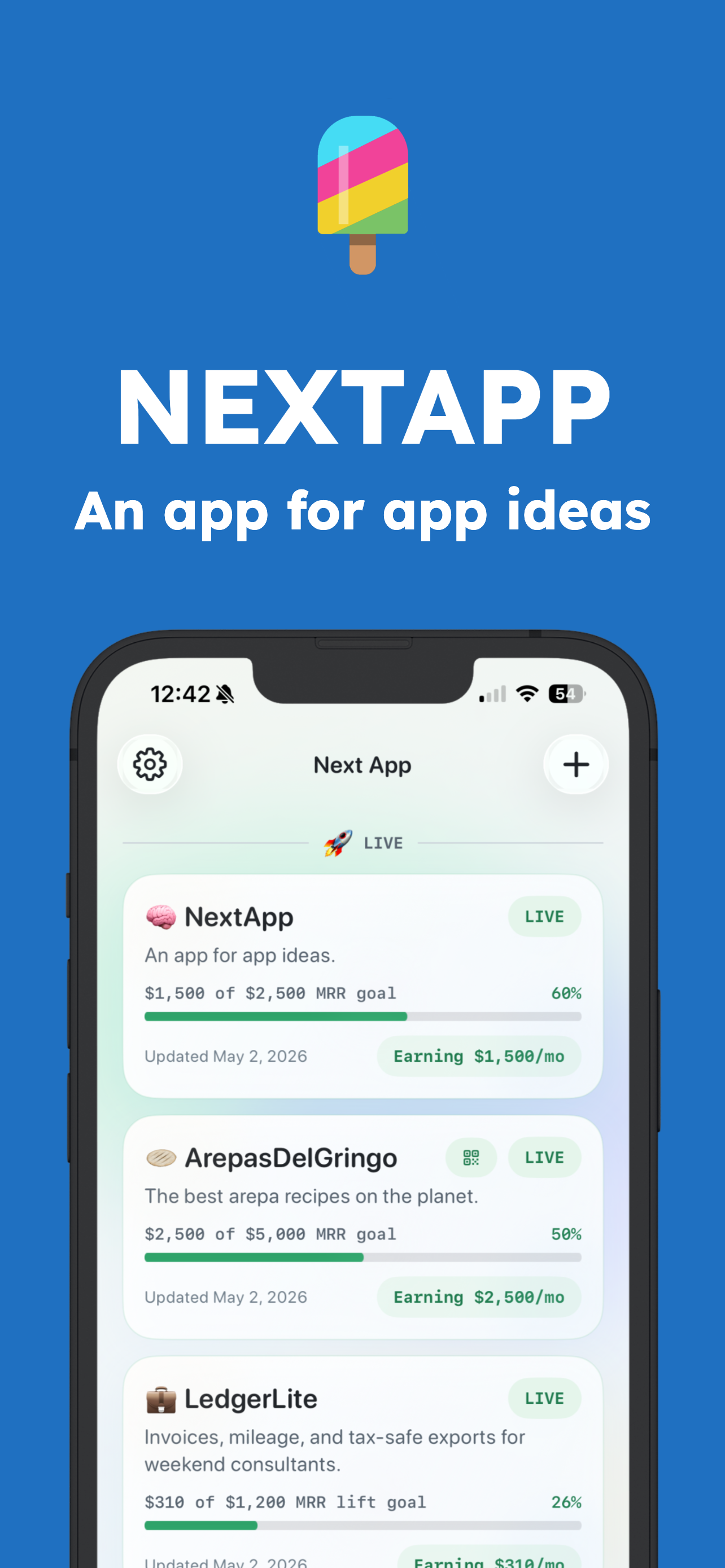
Public MRR works best when it explains a product story, not when it becomes the whole story.
Share the number with a reason
Public MRR is strongest when it supports a clear story: bootstrapping a small product, racing toward a goal, proving a launch channel, or showing progress over time.
Put the number near the app
A page-level total is useful, but app-level MRR is more honest for multi-app makers. It shows which product is earning and which one is still a bet.
Add a goal, not just a flex
A current number becomes more useful when paired with a target. $350 MRR toward $1,000 tells a visitor what you are trying to do next.
Know what stays private
You can share MRR without sharing churn, customer names, bank details, or every Stripe event. Public progress does not require public accounting.
Public MRR tracker checklist
- Revenue is tied to a public goal.
- App-level revenue is shown when multiple apps exist.
- The page explains what the number means.
- Sensitive financial detail stays private.
- The MRR display can be turned off without breaking the profile.
Keep going with MRR tracker tools, build in public, MRR tracker for solo founders.