
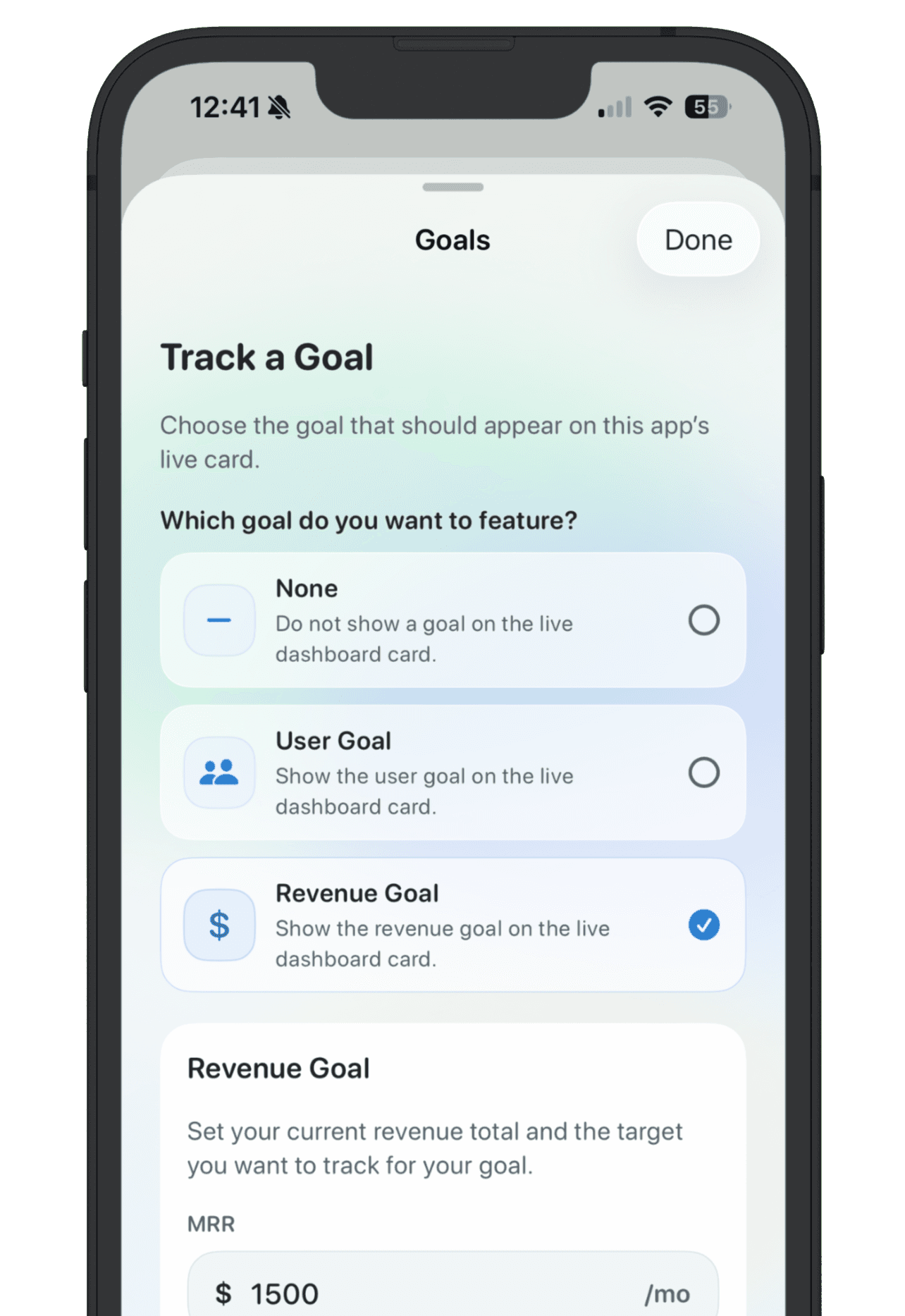
Monthly recurring revenue can be motivating, but early indie apps usually need a goal more than a complex finance dashboard. Before there is enough revenue to analyze, the useful question is simpler: what would make this app worth continuing?
An MRR goal tracker for indie apps should keep revenue ambition visible without turning the product workspace into accounting software. The goal is to connect money, users, feedback, and launch decisions in one place.
Start with a modest target
Pick a number that would change your behavior: first paid customer, first $50 MRR, first $100 MRR, first lifetime sale, or a small monthly target that proves someone values the product. The number can grow later.
Separate goals from actual bookkeeping
A goal tracker is not the same as Stripe, RevenueCat, accounting software, or a full analytics dashboard. Use payment systems as the source of truth for transactions. Use the app workspace to keep the target, context, and product decision visible.
Tie revenue to the app record
If you build several apps, one generic revenue note is not enough. Each app needs its own goal and context: pricing idea, launch channel, target user, current status, and the feedback that might explain why revenue is or is not moving.
Track non-revenue signal too
Early revenue is not the only useful signal. Installs, signups, waitlist joins, replies, App Store reviews, and feedback quality can all explain whether an app has momentum before MRR becomes meaningful.
Use revenue goals to make decisions
A revenue goal should lead to a decision. If the app hits the target, decide whether to double down. If it misses, decide whether the issue is traffic, activation, pricing, positioning, or product value. The goal is useful only if it changes the next action.
Make public proof optional
Some builders like sharing MRR publicly. Others prefer private tracking. Both are valid. The important distinction is that private revenue notes and public progress should be controlled separately.
NextApp gives each app a place for goals, revenue context, feedback, and public status. It is not a replacement for your payment processor. It is the product-side record that helps you decide what the numbers mean.