
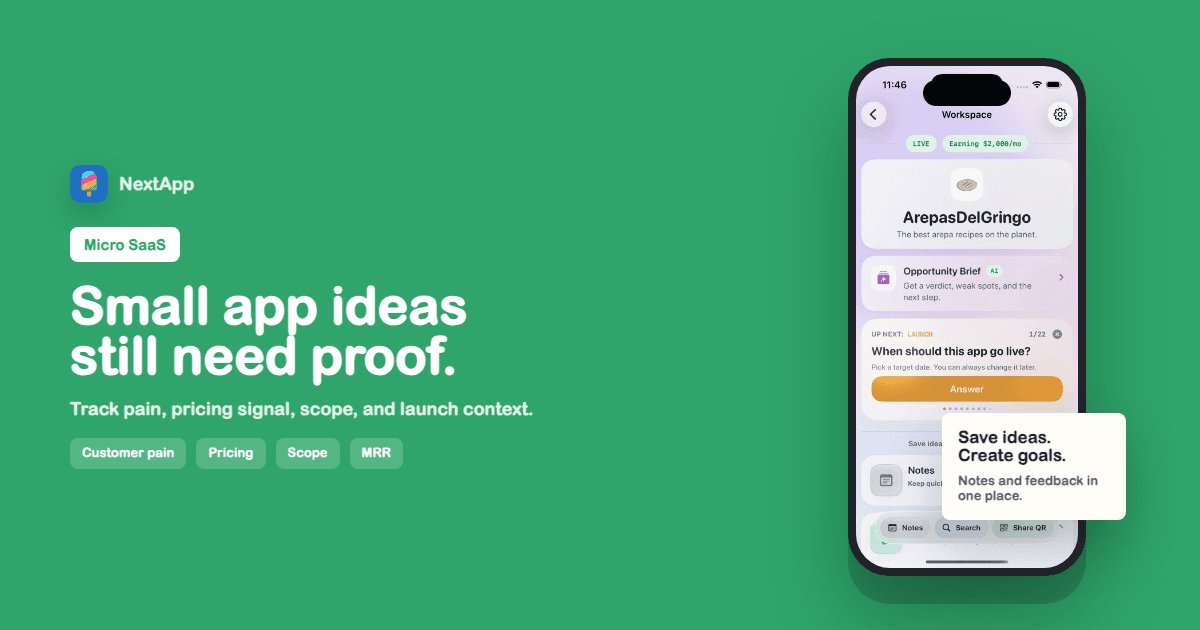
A micro SaaS idea tracker should protect small ideas from becoming vague. The whole point is focus: a narrow customer, a painful workflow, a tiny first version, and a price that makes sense.
If the tracker only stores app names, it will fill up with clever concepts. If it stores pain, proof, pricing, and scope, it starts showing you which ideas might become revenue.
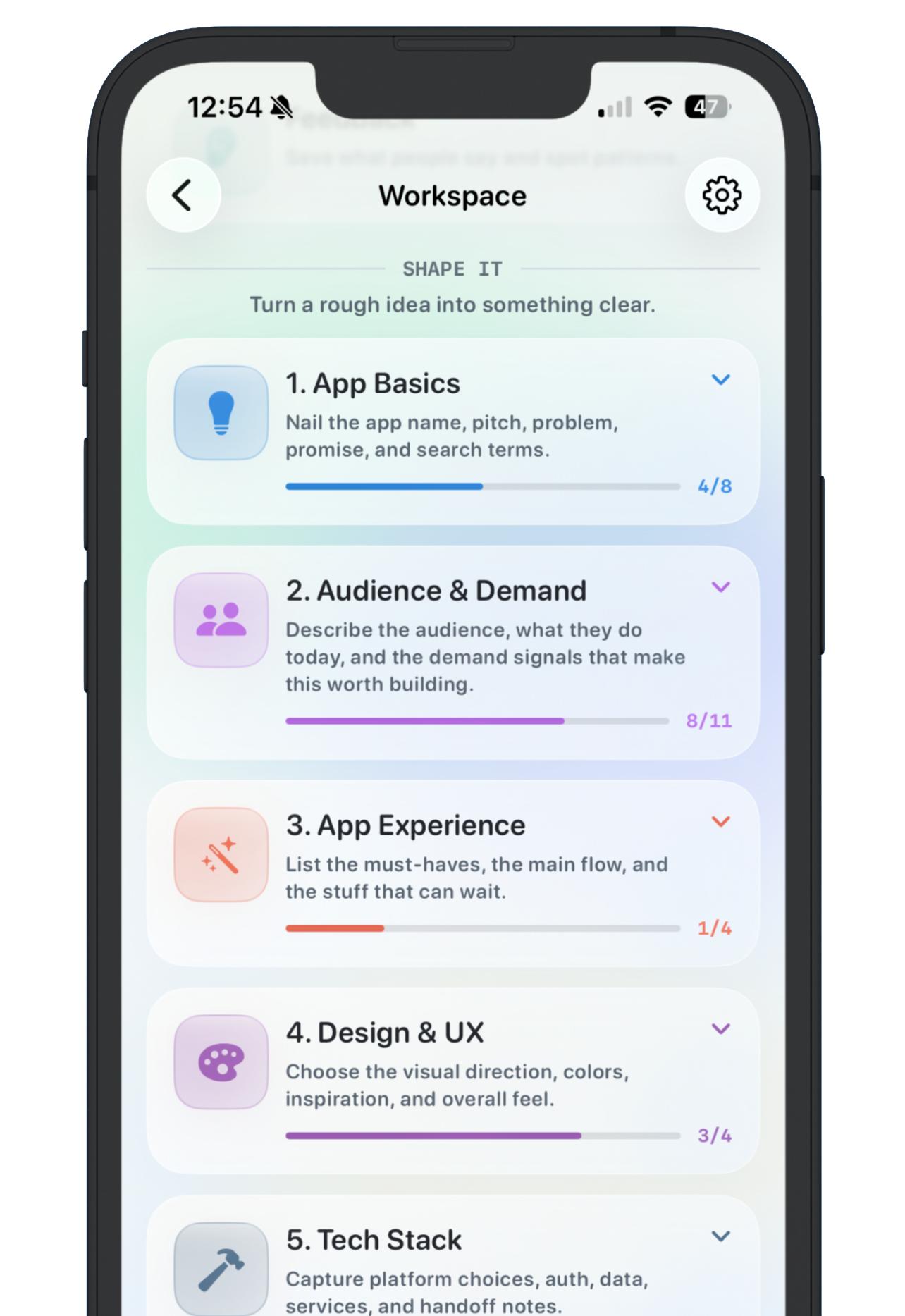
A micro SaaS idea still needs a customer, a wedge, and a reason to pay.
Start with the customer moment
Micro SaaS works when the problem is sharp. Write down the exact moment the customer feels the pain, not a broad market label like creators or agencies.
A narrow moment makes the first version easier to define and the launch copy easier to write.
Track willingness to pay early
Revenue does not need to be proven on day one, but the idea should carry a pricing hypothesis. Save competitor prices, manual workaround costs, and any quote that suggests the problem is expensive.
Keep scope brutally small
The tracker should force a first version. If the idea needs five workflows before it helps anyone, it may not be micro yet.
- One painful workflow.
- One buyer or user.
- One outcome the app improves.
- One launch channel to test first.
Move ideas into public proof when they earn it
Once a micro SaaS idea has a live page, revenue goal, or beta list, it should stop living only in the backlog. Put it on a maker profile so people can understand what is real.
Micro SaaS idea checklist
- Customer moment is specific.
- Pain is strong enough to pay for.
- First version is small enough to ship.
- Pricing hypothesis is written down.
- Launch channel and first proof are tracked.
Keep going with MRR tracker tools, MRR goal tracker, validate an app idea.