
Validating an app idea does not mean proving the whole business before you write code. It means reducing the biggest unknowns before you spend weeks building the wrong version. For indie builders, validation should be lightweight enough to happen before momentum disappears.
The trap is building because the idea feels clear in your head. The antidote is a short loop: define the user, write the promise, collect evidence, set a goal, and choose the smallest build that could teach you something real.
Define the first user
Start with the narrowest user who would immediately understand the problem. Do not write for everyone who might someday use the app. Write for the first person who would care enough to try it, complain about it, or pay for it.
If you cannot name that user, the idea is not ready to build. It may still be worth saving, but it belongs in research, not active development.
Write the smallest promise
A useful app promise connects a user to an outcome. It should be short enough to put in a headline. If the promise needs five clauses, the idea probably has too many jobs. Try cutting it down until one user and one result remain.
Collect evidence before features
Evidence can be direct or indirect. Direct evidence is a conversation, signup, pre-order, waitlist, support request, or someone asking for the tool. Indirect evidence is search demand, competitor reviews, forum pain, or repeated behavior you observe. Both can help, but direct evidence should carry more weight.
Keep evidence in the idea workspace. A screenshot of a painful workflow is more useful when it sits next to the app concept it supports.
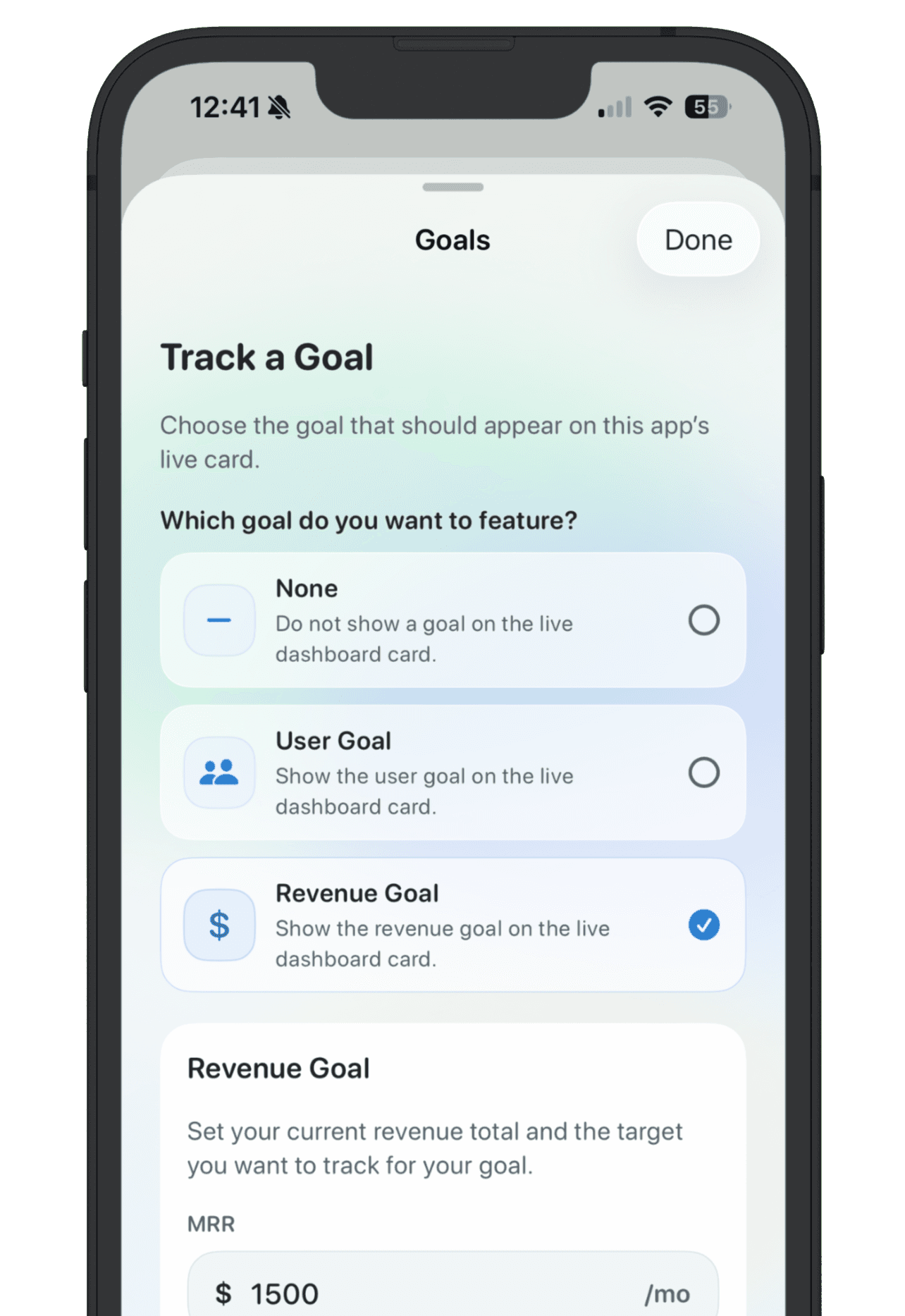
Set a validation goal
Decide what would count as enough signal for the next step. For a tiny utility, that might be five people asking to try it. For a paid tool, it might be one person agreeing to pay. For a public maker page, it might be a few builders sharing their profile because it explains their apps better than a generic link page.
Build the smallest learning version
The first build should answer the riskiest question. If the risk is demand, make a landing page. If the risk is workflow, make a prototype. If the risk is retention, ship a narrow version and watch whether people return.
Do not use validation as an excuse to avoid building forever. Use it to make the next build smaller and sharper.
Decide, do not drift
After the validation step, make a decision: build, research more, pause, or archive. A clear no is useful. It frees up attention for ideas with stronger signal.
NextApp helps with this by keeping the promise, target user, goals, feedback, and launch status attached to each app idea. Validation becomes a record you can revisit, not a feeling you have to reconstruct later.