
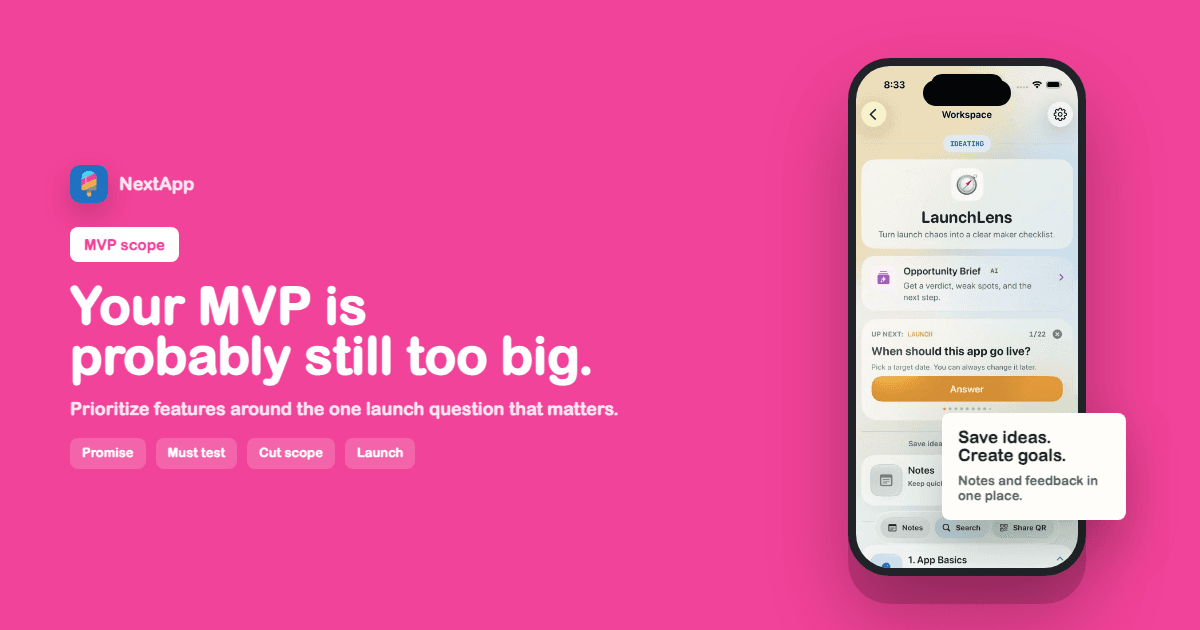
MVP feature prioritization is not about ranking every possible feature. It is about protecting the smallest version that can test the app's core promise.
A solo founder has one real constraint: attention. Every extra feature steals build time, launch energy, and feedback clarity. The first version should make one promise and prove or disprove it.
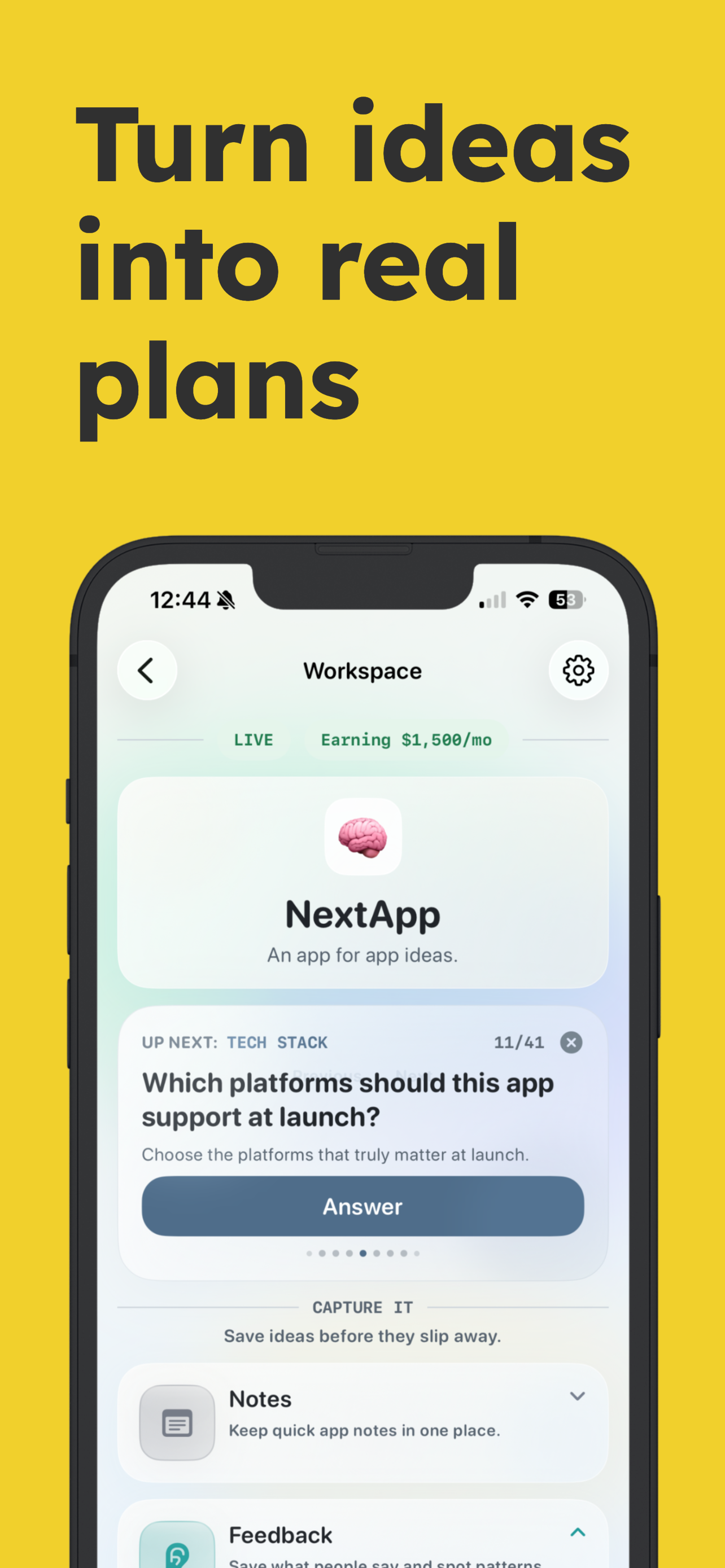
MVP planning is mostly subtraction: what can be removed while the promise still works?
Write the promise before the feature list
If you cannot write the promise in one sentence, the feature list will sprawl. Start with the outcome the user gets, then keep only the features required to create that outcome once.
Use three buckets
Sort features into must test, useful later, and distracting. The last bucket is not an insult. It is how the MVP survives.
- Must test: the feature that proves the promise.
- Useful later: real value, but not needed for first feedback.
- Distracting: polish, edge cases, or founder comfort features.
Tie scope to the launch question
The MVP should answer a question: will users join the waitlist, pay, invite a friend, complete onboarding, or use the tool twice? Features that do not help answer the question can wait.
Record the cuts
Do not keep cut features in your head. Save them on the app record with a reason. That makes it easier to revisit them after real feedback instead of emotional second-guessing.
MVP prioritization checklist
- One-sentence app promise is written.
- Launch question is clear.
- Must-test features are separated from later ideas.
- Cut features are saved for review, not half-built.
- The first version can be explained in one screenshot or short demo.
Keep going with MVP scope planner, launch profile checklist, feature request tracker.