
An indie app development tracker has a different job from enterprise project management. Solo builders do not need ceremony for its own sake. They need a small system that remembers what each app is, why it matters, what stage it is in, what feedback arrived, and what would make the next version worth building.
If you are running multiple app ideas at once, the tracker should cover the full path from idea to live product without forcing every idea into a roadmap too early.
Track the portfolio, not just tasks
Solo developers often have a portfolio: experiments, active builds, live utilities, paused apps, and ideas waiting for a better moment. A good tracker shows the whole portfolio so you can decide where attention should go this week.
Keep build notes close to the app
Each app needs its own notes: architecture choices, launch checklist, monetization ideas, support issues, and rough edges. If those notes live in separate tools, context gets lost every time you switch projects.
Measure progress with simple goals
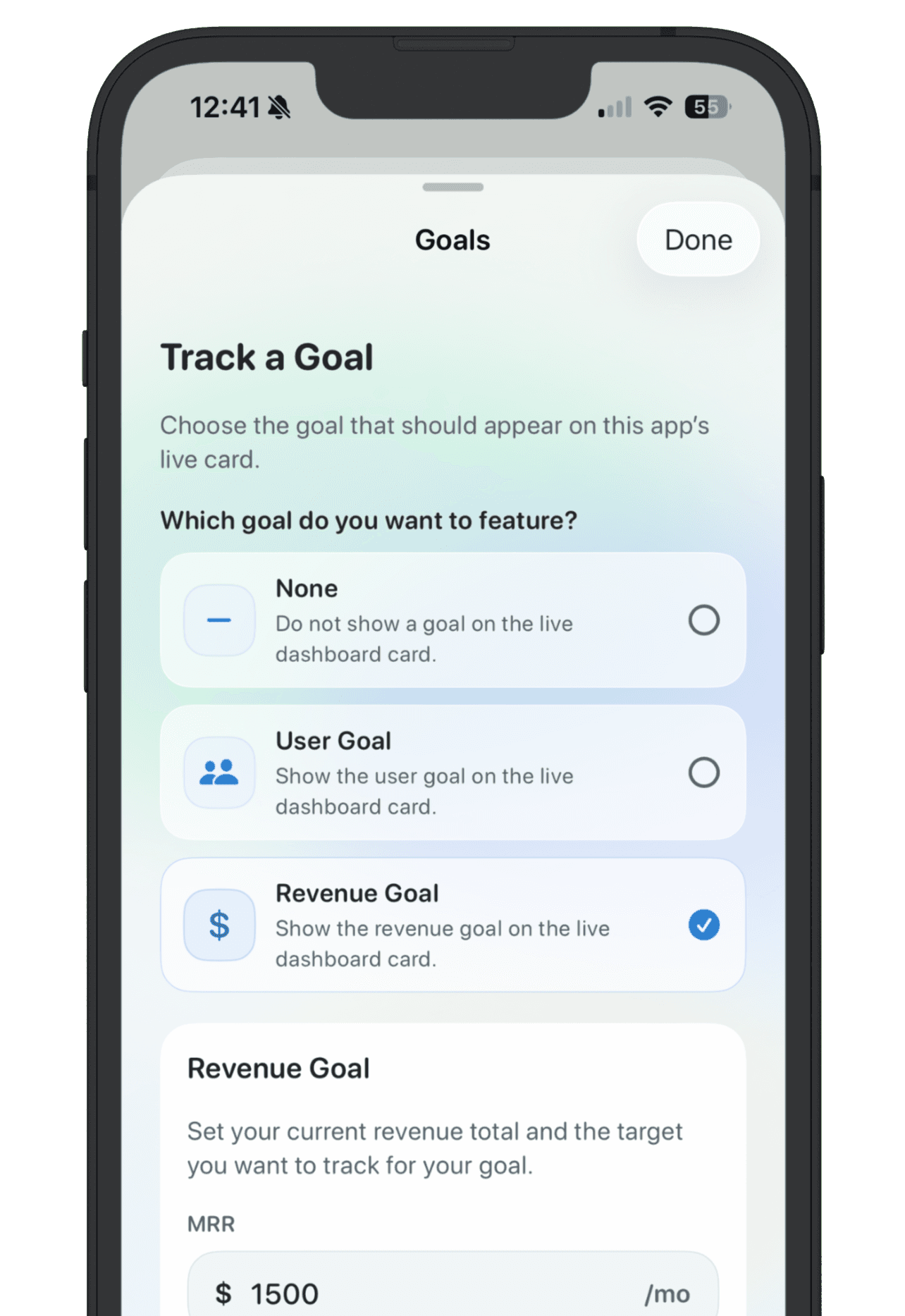
Progress is easier to interpret when each app has one visible goal. Use a user goal, revenue goal, waitlist goal, feedback goal, or launch milestone. The goal tells you whether the next feature is worth it or whether the app should pause.
Log feedback before changing scope
Indie apps are vulnerable to scope creep because every request can sound important. A feedback log helps you group similar requests and ignore one-off distractions. It also gives you a record of why a version changed.
Separate private work from public updates
Some notes are for you. Some updates are for the public. A tracker should let you keep implementation details private while sharing the public status, app link, revenue goal, or launch update when you want to build in public.
A simple indie app tracker structure
- Idea inbox for raw concepts
- Research list for ideas with evidence
- Build queue for active apps
- Live apps view for shipped products
- Feedback log attached to each app
- Goals and public updates for apps you are sharing
NextApp is designed for exactly this indie builder workflow: save app ideas, organize each app in a workspace, track goals and feedback, and publish a maker page for the apps you are ready to show.