
Lovable, Bolt, and Replit Agent can all help turn a plain-language app idea into something real. The right choice depends on what you are trying to make, how technical you are, how much control you need, and where the project should live after the first working version.
But the tool comparison is only half the problem. Builders often try Lovable for one idea, Bolt for another, Replit for a backend-heavy prototype, v0 for an interface, and Cursor or Claude Code when the project needs deeper edits. Without a tracking system, the comparison becomes a browser-history problem instead of a product decision.
Use the builder for the job, not the whole backlog
Lovable-style tools are useful when you want to describe a product flow and get a web app started quickly. Bolt-style tools are useful when you want a browser-based full-stack workspace with visible files and preview. Replit Agent is useful when you want a cloud workspace that can handle more general coding projects and deployed experiments. Cursor and Claude Code fit better once you are already working in a codebase.
That does not mean one tool should hold every idea. The app idea record should live outside the builder so you can compare projects across tools, switch tools without losing context, and remember why each prototype exists.
Keep the same decision trail for every AI-built app
- Builder used: Lovable, Bolt, Replit, v0, Cursor, Claude Code, Base44, or another tool
- Original idea: the plain-language promise before the prototype changed shape
- Live link: the current URL people can test
- Source link: the builder project, repo, or workspace
- Important prompt: the prompt that created or changed the core workflow
- Status: idea, prototype, testing, live, paused, or archived
- Feedback: what real users or testers said
- Next decision: what would make you keep building, pause, or ship
Compare ideas separately from generated output
The first generated app can make a weak idea look exciting. It can also make a strong idea look rough. Compare the underlying idea separately from the generated output. Ask whether the problem is specific, whether the first user is clear, whether feedback is reachable, and whether a small version can prove anything useful.
Then compare the builder output: which tool made the workflow understandable, which one produced a usable link fastest, which one made the code easier to change, and which one created the least cleanup work.
Keep one decision per project
The danger with AI app builders is endless movement. You can keep prompting, redesigning, regenerating, and migrating the same idea without ever learning whether anyone wants it. A good project record holds one current decision: test with five users, add onboarding, collect pricing feedback, rebuild in a different tool, publish the page, or archive it.
When to switch builders
Switch builders when the current tool is blocking the decision you need to make. If Lovable gave you a strong UI but the app needs backend control, record the reason and move the project. If Replit got the logic working but the public page needs a clearer story, keep the Replit link and create a better launch surface. Switching is fine when the decision is written down.
Use NextApp as the cross-builder memory
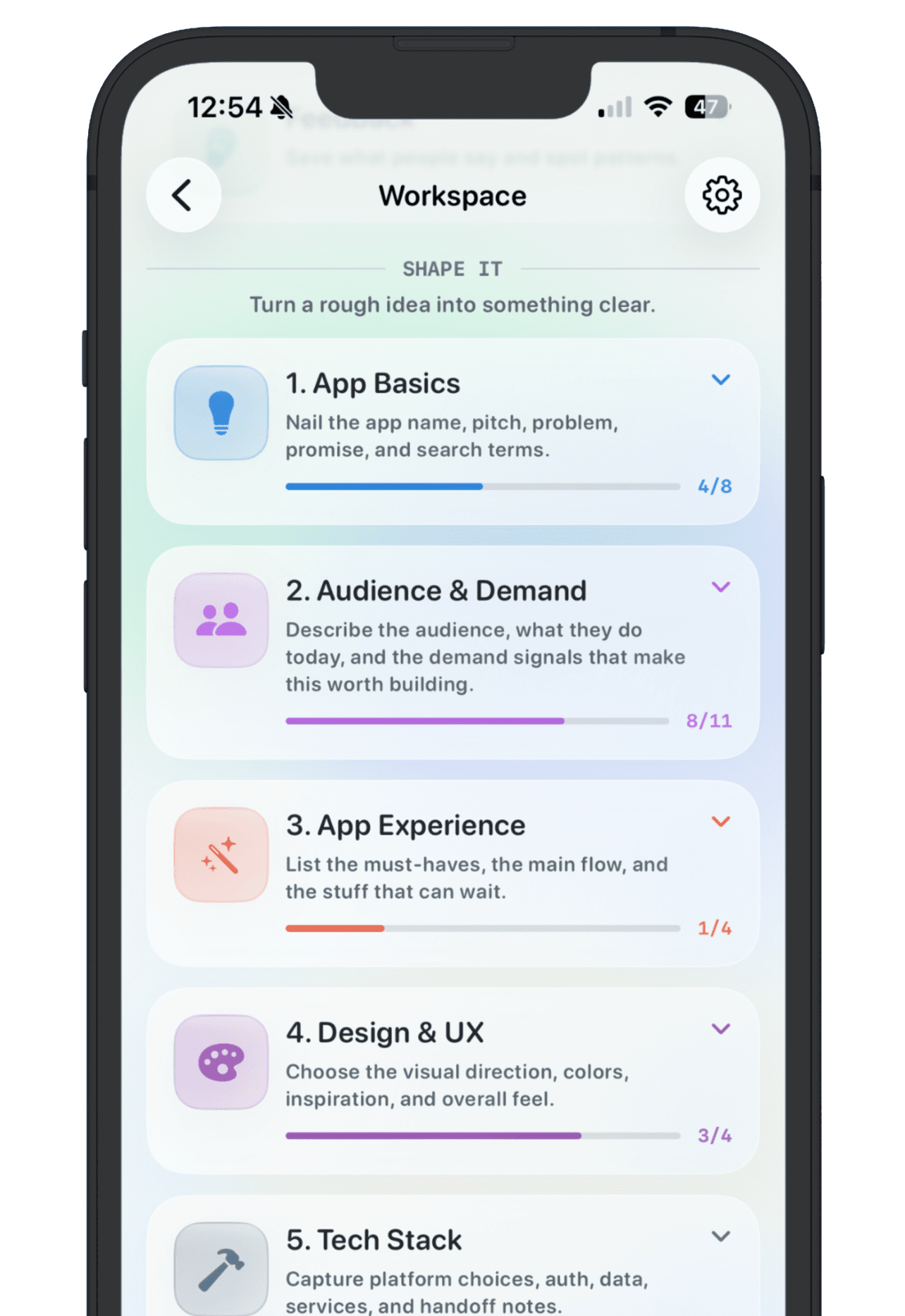
NextApp is not a replacement for Lovable, Bolt, Replit, Cursor, v0, Base44, or Claude Code. It is the layer between them: the place to save the app idea, attach generated links, track prompts and feedback, set a goal, and decide which AI-built apps are ready for a public maker page.
The best AI app builder is the one that helps you test the next decision. The best tracking system is the one that keeps those decisions visible after the tool tabs multiply.